
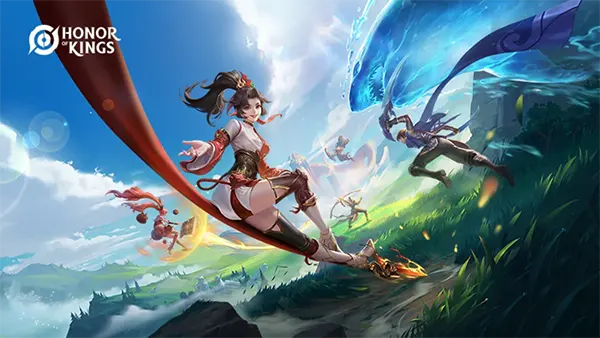
Honor of Kings Review (2026): Core Mechanics, Heroes, Ranks, and Matchmaking
Honor of Kings has become one of the most influential mobile MOBAs in the world, and by 2026 it remains a strong reference point for how fast, structured 5v5 gameplay can work on a phone. It looks simple at first glance—three lanes, a jungle, a handful of objectives—but the game rewards players who understand timings, hero roles, and how the ranked ladder actually works. This review breaks down the mechanics that matter, explains how heroes are organised, and clarifies what ranking up really involves in 2026.
Core gameplay mechanics: lanes, jungle, and objectives
At its heart, Honor of Kings is a 5v5 MOBA played on a symmetrical map with three lanes (Clash Lane, Mid Lane, Farm Lane) plus a jungle and roaming support role. Each lane has a practical job: the Mid Lane controls tempo with fast rotations, the Farm Lane focuses on scaling damage dealers, and the Clash Lane often becomes the frontline or split-push pressure point. Even in casual play, lane discipline matters because early structure damage and rotation speed dictate who controls the map first.
The jungle is not only a source of gold and experience—it is also the main driver of early aggression. Jungle heroes rely on efficient clear paths, quick ganks, and timely objective calls. A strong jungler will time their pressure around neutral monsters and lane states, rather than chasing random fights. This is one of the first differences players notice compared to simpler mobile battle games: here, the jungle is the engine that pushes the whole match forward.
Objectives decide games more reliably than flashy kills. The most important moments usually happen around neutral bosses, tower pressure windows, and teamfight setups in the river. When teams trade kills without taking anything on the map, the advantage fades fast. In 2026 play, consistent teams focus on tower rotations, vision control, and forcing fights when their key ultimates are ready rather than reacting late to enemy movements.
How team fights actually work: timings, positioning, and skill chains
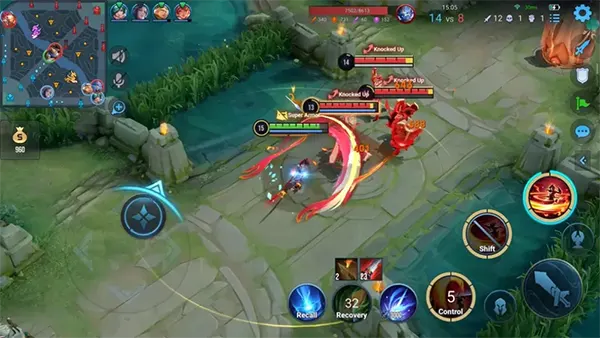
Team fights in Honor of Kings are won less by reaction speed and more by preparation. Players who track enemy ultimates, movement, and cooldown windows tend to win even with lower raw mechanical skill. A fight started when your team has key abilities available—and the enemy does not—often ends before it even feels like a “fair” battle. That is why experienced players constantly watch the minimap and keep mental notes of who has already used their strongest tools.
Positioning is a bigger deal than many new players expect. Damage dealers in the Farm Lane are often fragile, and if they step too far forward they can be removed instantly by assassins or control-heavy roamers. Meanwhile, tanks and bruisers in the front line need to create space without overcommitting into crowd control. By 2026 standards, most higher-level matches are decided by who protects their damage dealer more consistently, not who dives first.
Skill chains are also important because many heroes are designed around combos rather than single spells. Stuns, knock-ups, silences, and slows frequently stack into a situation where one target cannot respond. This is why team composition matters: a well-timed chain of control can turn a losing fight into a clean objective win. If you want to improve quickly, start by learning a few reliable heroes and mastering their exact engage and disengage patterns.
Heroes and roles: classes, lane fit, and team composition
Honor of Kings divides heroes into role-based classes such as Tank, Warrior, Assassin, Mage, Marksman, and Support, and each class tends to fit specific lanes. Mages usually thrive in Mid Lane because they influence early rotations and team fights. Marksmen are typically placed in the Farm Lane to scale safely and become late-game damage anchors. Tanks and warriors most often appear in Clash Lane or as frontline roamers, depending on kit and team needs.
What makes the hero system interesting is how flexible it becomes once you understand matchups. Some supports can play aggressively and start fights, while others are better at peeling and protecting carries. Some warriors are designed for split-pushing and tower pressure, while others are built to sit in the middle of team fights and absorb punishment. That flexibility means the same hero can feel completely different depending on your team composition and the enemy draft.
By 2026, team composition knowledge is one of the clearest separators between ranks. Good teams balance initiation, frontline durability, reliable damage, and crowd control. If a team drafts too many fragile heroes, they often collapse the moment a coordinated engage happens. If they draft too little damage, they may win fights but fail to finish objectives. The most stable approach is having at least one reliable frontline hero, one consistent damage dealer, and a supportive pick that can either protect or start fights depending on the situation.
Choosing heroes for ranked: what matters more than “meta”
Many players chase tier lists, but ranked success usually comes from consistency. If you can play three to five heroes very well across two roles, you will climb faster than someone who swaps picks every match trying to mirror trends. Tier strength matters, but only if you understand how that hero wins fights and how they lose them. A “top” hero played poorly is still weaker than a slightly less popular hero played with real confidence.
In ranked games, the most practical hero choices are those that offer reliable value even when teammates struggle. Examples include heroes with solid wave clear, safe damage, dependable crowd control, or flexible engage tools. Heroes that require perfect coordination can feel amazing in organised teams but may be frustrating in solo queue where communication is limited. That is why many climbers prefer stable picks that can adapt to messy fights.
It also helps to pick heroes that match what your rank tends to lack. In lower and mid ranks, teams often need someone to start fights properly or someone to protect the marksman. In higher ranks, teams punish weak drafting and poor lane assignments harder, so flexible heroes with strong rotations become more valuable. A smart approach is learning at least one tanky engager, one reliable damage carry, and one roaming support who can control the tempo.
Ranks and matchmaking: how progression works in 2026
The ranked ladder in Honor of Kings is structured around a tier system where players progress by earning stars through wins and losing them through defeats. Seasons typically run in cycles, and at the end of a season ranks are adjusted through a reset based on performance. This keeps the ladder active and ensures that players continually prove their skill rather than sitting at a peak rank forever.
Matchmaking aims to create balanced games by pairing players with teammates and opponents of similar strength, taking into account rank and performance factors. In practice, it can still feel uneven—especially during peak hours, right after a season reset, or when players queue in premade teams. However, over a large number of games, your win rate tends to reflect how consistently you make correct decisions rather than individual “bad luck” matches.
Ranking up is not only about winning; it is also about performing well enough that the system recognises consistent impact. If you play a supportive role and enable objectives, your influence can be harder to measure than raw kills, but the best support players still climb because they win games reliably. In 2026, the most effective mindset is treating ranked as a long-term climb: focus on decision quality, avoid tilt queues, and prioritise objectives over ego fights.
Practical ranked improvement: habits that actually change results
The first habit that improves rank climb is building a stable routine: warm up, pick a role you understand, and avoid playing when you are distracted. Small errors compound quickly in MOBA games because one death can lead to a lost objective, which leads to gold disadvantage, which leads to a forced defensive posture. Players who climb consistently minimise avoidable mistakes and keep their pace steady across many matches.
The second habit is learning to read the minimap like it is part of your kit. Good players glance constantly, notice when enemies disappear, and adjust their lane position before danger arrives. This alone prevents a surprising number of deaths. In Honor of Kings, staying alive often matters more than making risky plays, because the enemy can convert kills into tower pressure and objective control very quickly.
The third habit is being selective with fights. If your team’s ultimates are down, if your marksman is not present, or if the wave state is bad, starting a fight usually backfires. Instead, you can secure vision, clear waves safely, and prepare for the next objective window. Ranked climbing is rarely about heroic moments; it is about repeating correct choices until the ladder reflects it.
Game Bestsellers
-
 Call of Duty: Warzone Mobile Performance Analysis Across Modern Dev...
Call of Duty: Warzone Mobile has become one of the …
-
 Squid Game: Unleashed — A Mobile Battle-Royale Inspired by the Hit ...
Squid Game: Unleashed is one of the most anticipated mobile …
-
 Assassin’s Creed Jade — A New Chapter in the Assassin’s Universe
Assassin’s Creed Jade marks an important step for Ubisoft as …