
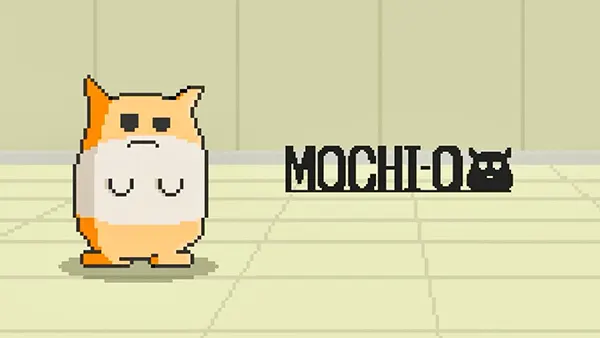
MOCHI-O Review: Cute Hamster Defence for Short Mobile Sessions
MOCHI-O looks like the sort of cheerful puzzle game that might ask players to match sweets or guide a pet through tidy stages, yet its real identity is much stranger. Zxima’s 2026 release is a one-handed action, tower-defence and roguelite game in which a round hamster-like creature serves as both companion and weapon. The player holds the creature at the right side of the screen, aims across a scrolling battlefield and stops enemies from crossing a defence line. Between sorties, the same dangerous animal can be fed, petted and given room decorations. This contrast gives MOCHI-O its personality, while compact battles and simple touch controls make it well suited to brief mobile sessions. It is not a conventional puzzle title, but it does create small tactical problems through target selection, random upgrades and limited resources.
What MOCHI-O Actually Is and How It Plays
The official description presents MOCHI-O as a homeland-defence adventure set in a soft, eccentric post-apocalypse. Players become the keeper of a suspiciously powerful creature and are ordered to protect the country from approaching forces. The premise is deliberately absurd: a cute hamster can fire bullets, missiles and far more destructive weapons, while its handler tries to build enough trust to avoid becoming another casualty. The humour is dark without becoming excessively grim, and the game uses short conversations to give context to each assignment. This is a single-player experience rather than a competitive or social game, so progress depends on learning enemy behaviour, improving permanent statistics and making effective choices during each run.
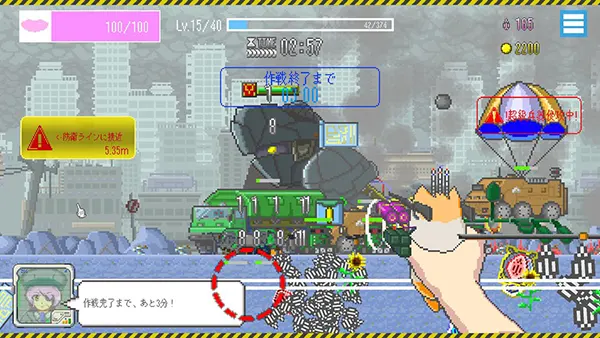
Combat takes place on a horizontal field. Enemies move from the far side of the screen towards the protected line, and every unit that crosses it removes part of the player’s remaining defence. MOCHI-O fires in the direction selected by the player, so the central task is not complex movement but careful aiming and prioritisation. A large target may threaten heavy damage, while a cluster of weaker units can become more dangerous if ignored. Some battlefield objects and enemy formations also reward attention to timing. Destroying the correct unit first may damage others nearby, giving the action a light problem-solving quality even though the game is formally classified as action and tower defence.
Defeated enemies leave seeds that are pulled towards MOCHI-O and converted into experience. Reaching a new level pauses the battle and presents a random choice of upgrades. These can improve familiar statistics such as firing speed, attack range, critical chance and seed collection, or add weapons including homing missiles and large energy attacks. Since the available choices differ between runs, players cannot follow exactly the same plan every time. A strong attempt often comes from adapting to what appears, combining upgrades that support one another and avoiding a collection of unrelated abilities that never becomes powerful enough for later waves.
Combat Flow, Controls and Tactical Choices
The touch scheme is built around one-handed play. The player presses and drags to direct MOCHI-O’s aim, while much of the firing and seed collection happens automatically. This removes the need for several virtual buttons and keeps the screen readable on a phone. It also means that the challenge comes from attention rather than complicated input. Players must watch the whole lane, notice which enemies are close to the line and move their aim before a dangerous group slips through. The controls feel immediate after a short adjustment period, although anyone expecting free character movement or elaborate manual abilities may find the interaction deliberately narrow.
MOCHI-O works well in short sessions because its rhythm is easy to resume. A battle starts quickly, upgrades arrive at regular intervals and the objective is always visible. There is no large map to remember and no lengthy inventory routine before every attempt. At the same time, calling it a fully relaxed game would be misleading. Later waves can fill the screen, stronger enemies absorb sustained fire and a poor upgrade combination can leave the player underpowered. The result is a useful balance for mobile play: the basic rules are simple enough for a spare moment, but success still asks for concentration.
The best tactical habit is to judge threats by consequence rather than size alone. Large enemies can remove a substantial amount of defence if they pass the line, yet a crowd of minor units may cause greater total damage. Players also need to consider where dropped seeds will appear and how efficiently MOCHI-O can collect them. Improving suction or collection range may seem less exciting than adding another weapon, but faster levelling can create more upgrade opportunities over the full battle. This is where the game comes closest to a puzzle: each run asks the player to solve a changing priority problem with incomplete information and a limited set of random tools.
Progression, Care Systems and Replay Value
Money earned from combat is used outside battle to strengthen MOCHI-O permanently. Upgrades can raise core statistics, while additional weapons become available after the relevant requirements are met. This creates a clear reason to repeat stages even after a failed attempt. A run that does not reach its final wave can still provide resources for the next one, reducing the frustration that often comes with roguelite failure. The progression is easy to understand, but costs rise and the most useful improvements require patience. Players who enjoy visible, steady growth will probably appreciate this structure more than those who prefer every stage to depend only on immediate skill.
Feeding is more interactive than a standard upgrade menu. Seeds are flicked towards MOCHI-O’s mouth in a small timing activity, and successful care increases trust as well as combat ability. Petting the creature and arranging decorations in its room add a gentler routine between violent missions. These actions are not merely cosmetic because the bond with MOCHI-O contributes to stronger statistics. The connection between care and power is one of the game’s cleverest ideas: the player is encouraged to treat the supposed weapon as a living companion, while the story repeatedly reminds them that it remains unpredictable and extremely dangerous.
Replay value comes from several overlapping systems rather than a huge number of separate modes. Random battle upgrades change each attempt, permanent development gradually alters the starting position and weapon unlocks create new combinations. Normal progression provides a defined sequence of challenges, while an endless mode tests how long a build can survive. The system has enough variation to support repeated mobile play, although its limits become visible after many hours. The basic action remains centred on aiming from one side of a single lane, and some upgrade selections can feel restrictive when the game repeatedly offers improvements that do not suit the build a player is trying to complete.
Visual Style, Story and Audio
The pixel art gives MOCHI-O a clear identity without demanding a large display. Characters use expressive portraits, battlefield units remain recognisable during busy moments and the creature’s rounded design makes every destructive upgrade look slightly ridiculous. The contrast between soft colours, domestic room scenes and military destruction supports the central joke rather than serving as decoration alone. Effects become more intense as a build develops, with missiles, beams and projectiles crossing the field, but the visual language usually makes threats and attacks easy to distinguish. On smaller phones, crowded late-game scenes can still require close attention.
Story scenes are brief and placed between missions, which suits the game’s mobile structure. The Director communicates through a monitor and treats the keeper as replaceable, while MOCHI-O’s intentions remain uncertain. Dialogue shifts between affectionate, threatening and absurd, creating a tone that is warmer than the setting suggests. The writing does not attempt a long, serious account of war or survival. Instead, it uses concise exchanges to build relationships and reveal the strange rules of its world. Players who normally skip mobile-game dialogue may find these scenes easier to accept because they are short and closely connected to the creature they are upgrading.
Sound design reinforces the pace with sharp firing effects, impact sounds and clear feedback when upgrades or rewards appear. The music supports the retro presentation without overwhelming the action. Repetition is unavoidable during extended play because battles share a consistent structure, but short sessions reduce this problem. The English localisation communicates the humour well enough, and the game also officially supports Japanese, Simplified Chinese and Traditional Chinese. Full audio and subtitles are available in the supported languages on the Steam release, while mobile presentation and store information can vary slightly by region and device.
Mobile Experience, Monetisation and Practical Limits
As of July 2026, MOCHI-O is available on iOS, Android and Steam. The mobile edition is free to install and includes advertising and in-app purchases, while the Steam edition is sold as a paid game. On Apple devices, the current listing requires iOS or iPadOS 15.0 or later and reports an installation size of roughly 184 MB, although download size can change with updates. The iOS version also runs on supported Apple-silicon Macs. Android requirements depend on the individual device and regional store listing. Players should check the current download page before installation, particularly on older phones or devices with limited storage.
Advertising is the main practical difference between the mobile and PC editions. Optional reward adverts can increase post-battle gains or provide other bonuses, while the mobile version also offers a paid VIP option that removes forced adverts and changes access to some advert-linked rewards. The listed US price was $3.99 at the time of this review, but local pricing and tax may differ. This is not structured as an aggressive competitive economy, since there is no player-versus-player race that forces spending. Even so, repeated reward prompts can interrupt the clean rhythm, and players who strongly dislike advertising may prefer the paid option or the Steam release.
The developers continued updating the mobile edition during 2026. Apple’s version history records fixes for progression blocks, crashes, missing weapons and frame-rate drops, followed by version 1.48 in June with a point-to-seed exchange and automatic pausing when the app moves to the background. Google Play listed a further update on 29 June. These changes indicate active maintenance, but they also show that early builds had technical faults. Current performance will vary by device. The one-handed controls and modest pixel-art presentation generally suit phones well, yet dense projectile effects can still test older hardware during advanced waves.
Who Should Play MOCHI-O in 2026
MOCHI-O is a strong match for players who enjoy roguelite progression but do not want a complicated control layout. It is also suitable for people who like virtual-pet routines, pixel art and offbeat stories that mix affection with dark comedy. The short setup time makes it convenient for commuting, breaks or a few attempts before bed. It asks for enough tactical thought to stay engaging, especially when choosing upgrades and deciding which enemy to target, but it does not require the planning burden of a large strategy game. Players looking specifically for match-three boards, logic rooms or physics riddles should choose another title because MOCHI-O is not a traditional puzzle game.
Its main strengths are a memorable concept, responsive one-handed aiming, clear long-term improvement and an unusually meaningful bond system. Its main weaknesses are equally clear: combat remains mechanically simple, random upgrades can obstruct a preferred build and adverts affect the mobile flow unless the player accepts them or pays for the VIP option. The narrow battlefield design also means that repetition eventually sets in. These limitations do not undermine the game’s central appeal, but they define the likely audience. MOCHI-O is best treated as a compact action game with tactical decisions, not as a deep shooter or a broad management simulation.
Current reception supports that assessment. At the time of checking in July 2026, the iOS listing showed a 4.9 rating from more than 500 users, while Steam displayed 99% positive feedback from 220 reviews; both figures may change as new ratings arrive. The response reflects how effectively the game turns one eccentric idea into a coherent mobile experience. MOCHI-O is easy to start, distinctive enough to remember and structured around runs that fit naturally into short periods of free time. Its cute appearance is genuine, but the pleasure comes from the tension between caring for a small companion and using that companion to erase an entire line of enemies.
Game Bestsellers
-
 Mobile Games and Online Casino: A New Form of Interactive Entertain...
Mobile technology has reshaped modern entertainment habits, allowing users to …
-
 Warframe Mobile — Can a Full Looter-Shooter Experience Work on Smar...
The arrival of Warframe Mobile has raised a practical question …
-
 Call of Duty: Warzone Mobile Performance Analysis Across Modern Dev...
Call of Duty: Warzone Mobile has become one of the …