
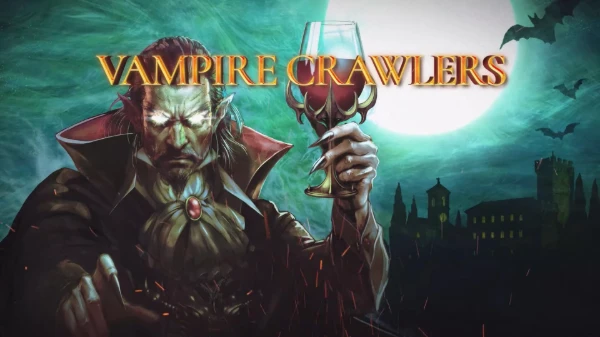
Vampire Crawlers on Android and iOS: Card Combos, Dungeons and the Death Parade Update
Vampire Crawlers arrived on Android and iOS on 12 October 2026, bringing the card-based adventure from the creators of Vampire Survivors to mobile devices. Developed by poncle and Nosebleed Interactive, the game replaces the original’s real-time survival battles with turn-based combat, powerful card combinations and first-person dungeon exploration. The mobile release includes the complete game and the free Death Parade update, which introduces new characters, locations and combat mechanics. Understanding how Mana, Wild cards, weapon upgrades and dungeon progression work makes it much easier to build effective decks and survive increasingly difficult encounters.
How Card Combos and Turn-Based Combat Work in Vampire Crawlers
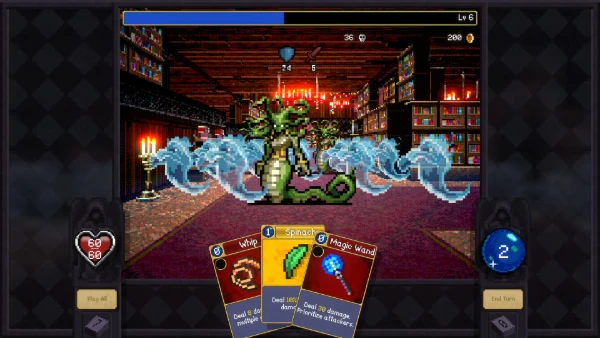
Combat in Vampire Crawlers revolves around constructing sequences of cards rather than attacking enemies continuously. Each turn gives players an opportunity to arrange available cards into a combination that produces increasingly powerful effects. The central rule is to play cards in ascending Mana order, allowing each successful addition to strengthen the following attack. A well-organised combination can deal considerably more damage than several cards played without a clear plan. Unlike traditional action games, players can examine their hands and consider the best sequence before committing to an attack. This makes preparation, card selection and understanding weapon effects more important than reaction speed.
Mana values determine how cards fit together, but the strongest individual card is not necessarily the best opening move. Starting with a lower-value card can create opportunities to extend a combination and increase the effectiveness of later attacks. Wild cards are especially valuable because they help continue sequences that might otherwise end prematurely. The developers have demonstrated combinations containing 10, 20 or even 30 cards, although achieving such results depends on the deck and available effects. When choosing between cards, players should therefore consider how many additional actions each option enables. A modest attack that extends a chain may contribute more total damage than using a powerful weapon too early.
Vampire Crawlers also introduces Turboturn, a combat approach that allows players to execute their decisions rapidly without abandoning the underlying turn-based rules. Those who prefer careful planning can examine card effects, organise their sequences and consider possible outcomes at their own pace. Players familiar with faster mobile games can move through straightforward encounters more quickly. Both approaches use the same combat mechanics, so there is no need to rush through a difficult hand. A useful habit is to identify the cards that can start a sequence, check which ones can extend it and reserve powerful effects for the point where they can benefit from the largest combination multiplier.
Building Strong Decks with Weapons, Gems and Wild Cards
Deck development begins with the weapons and abilities collected during a run. Defeating enemies provides experience, which contributes to levelling up and obtaining additional cards. As the deck grows, players can strengthen existing strategies or introduce effects that complement their favourite weapons. Simply collecting every appealing card is rarely the most practical approach. A deck with several expensive attacks but insufficient ways to extend combinations may struggle to use its strongest abilities efficiently. Instead, players should balance damaging cards with useful supporting effects. Wild cards become particularly important when a hand contains valuable attacks that cannot easily be connected through ordinary Mana progression.
Gems add another layer of customisation because they modify the behaviour of individual cards. They can be found while exploring dungeons, including through treasure chests, and offer ways to develop a build without depending entirely on new weapons. Weapon evolutions provide another important objective. These enhanced forms can create powerful interactions with other abilities and substantially change how a deck performs. Before committing resources to a particular strategy, it is sensible to examine which existing cards already work well together. Strengthening a reliable combination can be more useful than pursuing an unfamiliar evolution that does not support the rest of the deck.
One practical approach is to construct combinations around a small number of dependable attacks and then improve the cards that help activate them. For example, a deck built around repeated attacks benefits from opportunities to maintain long chains, while one relying on stronger individual effects needs reliable ways to place those effects late in a sequence. Gems and supporting cards should reinforce that objective rather than introduce unrelated abilities. It is also worth considering the enemies currently causing problems. Extra damage may help against durable opponents, but better card circulation can be more valuable when hands regularly contain unusable combinations. Successful deckbuilding involves adjusting these priorities throughout the run rather than following one fixed arrangement.
Exploring Dungeons, Collecting Rewards and Progressing Through the Game
Vampire Crawlers combines its card battles with first-person dungeon exploration, giving the adventure a different structure from Vampire Survivors. Instead of surviving against continuous waves in an open arena, players navigate enclosed locations, encounter enemies and search for useful objects. Dungeon layouts feature walls, treasure and interactions that reward examining the surrounding environment. Chests are particularly important because they can provide power-ups and gems for improving cards. The unusual method of opening them involves physically bumping into them, fitting the game’s deliberately playful presentation. Exploration is therefore connected directly to combat progression: valuable discoveries can improve the deck before the next difficult encounter.
Progressing through a dungeon involves more than defeating whatever appears directly ahead. Players need to locate routes, examine accessible areas and find the shovel used to advance to the next floor. Moving forward without considering available rewards can mean entering later encounters with fewer useful upgrades. At the same time, exploring every possible direction is not automatically worthwhile if the current deck is already struggling. A sensible approach is to assess the value of nearby discoveries, collect accessible improvements and avoid overlooking important routes. Since combat is turn-based, there is also an opportunity to reconsider deck performance after difficult encounters and identify weaknesses before continuing deeper into the dungeon.
Dungeon runs contribute to broader progression through unlockable content, character development and improvements that become available as players advance. Different Crawlers provide opportunities to approach combat with different strengths, while weapon evolutions and other discoveries encourage experimentation. The game was originally released on PC and consoles on 21 April 2026, and the mobile edition contains the full experience rather than a reduced collection of stages. This is important for Android and iOS players because the main progression systems, card combinations and exploration mechanics remain part of the mobile release. Completing the central adventure also becomes significant when accessing the additional challenges introduced through Death Parade.
Practical Strategies for Dungeon Runs on Android and iOS
The most useful early strategy is to understand how the current deck performs before adding unnecessary complexity. During the opening encounters, identify which attacks consistently produce useful results and which cards are difficult to include in combinations. When new cards become available, consider whether they improve an existing sequence or create another reliable option. This is particularly important on mobile devices, where a complicated hand may require more attention to organise. There is no advantage in choosing cards rapidly simply because the game is being played on a phone. Careful sequencing often provides better results than repeatedly selecting the most immediately powerful-looking attack.
Treasure and upgrades should be evaluated according to the problems encountered during the run. If combinations frequently stop because suitable cards are unavailable, prioritising effects that improve card circulation can be worthwhile. If the deck already produces consistent chains but struggles against tougher enemies, strengthening its main damaging abilities becomes more attractive. Players should also pay attention to opportunities for weapon evolution rather than treating every new reward as equally useful. When exploring, remember that progression requires finding the way to the next floor. A strong deck will not compensate for repeatedly missing important routes or overlooking useful treasure in accessible parts of a dungeon.
Mobile players should also understand the practical differences between starting a new adventure on a phone and continuing an existing game elsewhere. According to poncle’s official mobile FAQ, Vampire Crawlers launched on Android and iOS at a listed US price of $9.99, with regional prices determined by the relevant app stores. It is a standalone purchase, so owning Vampire Survivors is unnecessary. Cross-platform save transfers were not available at the October 2026 mobile launch, although the developer was working on account functionality to support them. Anyone who already owns the PC or console version should therefore avoid assuming that unlocked characters, completed dungeons or other progress will automatically appear on a mobile device.
Death Parade Update: New Crawlers, Dungeons and Combat Mechanics
Death Parade was released on 12 October 2026 as a free content update for Vampire Crawlers, arriving on Android and iOS alongside the mobile game itself. It adds one new stage, three dungeons, two playable Crawlers, two weapons, one weapon evolution and one utility card. The update also introduces four Gems, four Arcanas and two Relics, expanding the possibilities for modifying existing decks. Rather than simply providing additional enemies and equipment, Death Parade places greater emphasis on managing the cards available during a turn. Discarding unwanted cards, replacing parts of a hand and exploiting effects linked to these actions become important elements of its combat system.
Moongolow is one of the update’s most significant additions because it introduces a challenge built around restricted card availability and discarding. On the first visit, a special Relic limits the number of cards players can hold, encouraging a different approach to combination building. Following completion of the challenge, the associated modifier can be enabled or disabled in other stages. The update also includes Moongohigh among its new post-game dungeons. Players can access this additional content by exploring the world map after defeating the final boss of the main adventure. This means the new locations are designed primarily for players who have already developed their decks and gained experience with the original combat mechanics.
The two new Crawlers, Sir Ambrojoe and Big Troubler, provide additional possibilities for building combinations around hand management and Luck-related effects. Big Troubler is particularly relevant to players interested in attacks that spread across multiple opponents. His evolved weapon, Spirit Disturbance, uses mechanics that can produce chains of critical explosions and additional area damage. The update also introduces new effects called Bouncy, Crit Explosion and Roaring. Bouncy allows attacks to rebound between enemies according to Luck, provided there are at least two targets. Crit Explosion turns critical hits into explosions that can trigger further critical effects, while Roaring increases area damage as attacks spread between enemies.
How Death Parade Changes Card Management and Future Updates
One of the most interesting new cards is Karoma’s Mana, which gives players another way to manage difficult hands. At its base cost, it uses one Mana to Switch a card and then restores that Mana, making the exchange less expensive than it initially appears. Its Adaptability effect changes the card’s cost according to the last card added to the current combination, setting it one point higher. Adaptability is also available through a Gem that can be applied to existing cards. This creates opportunities to incorporate the mechanic into established decks without rebuilding everything around the new equipment. However, players still need to consider how changing costs affect the order of a combination.
Death Parade’s four new Arcanas are Infinite Combo, Chair Game, Crawler Brawler and Ebb & Combo. Chair Game offers a particularly clear example of the update’s new direction. Once per turn, when the remaining cards cannot continue an active combination, it can Switch up to four cards, discarding them and drawing replacements. This can rescue a chain that would otherwise end. The discarded cards may also activate Afterlife effects or contribute to abilities such as Scavenge, which benefit from discarding. Consequently, removing cards is no longer necessarily a disadvantage. A card that appears unusable in the current sequence can still provide value through its discard effect, while the replacement offers another opportunity to extend the combination.
The additional Relics give players control over whether certain challenge mechanics remain active after they have been unlocked. This means completing Death Parade’s restricted-hand challenges does not permanently force the same limitations onto every future dungeon. Its new Gems and other content can also be used without activating those optional restrictions. As of October 2026, poncle has confirmed that two further content updates originally planned for 2026 have been postponed until early 2027, while smaller quality-of-life improvements remain planned for the rest of the year. For mobile players, the immediate priority is understanding the existing systems: building efficient Mana sequences, choosing useful dungeon rewards and experimenting with Death Parade’s discard mechanics. These features provide substantial variety without requiring additional purchases beyond the main game.
Game Bestsellers
-
 Mobile Games and Online Casino: A New Form of Interactive Entertain...
Mobile technology has reshaped modern entertainment habits, allowing users to …
-
 Warframe Mobile — Can a Full Looter-Shooter Experience Work on Smar...
The arrival of Warframe Mobile has raised a practical question …
-
 Call of Duty: Warzone Mobile Performance Analysis Across Modern Dev...
Call of Duty: Warzone Mobile has become one of the …